
HOW DID IDA SUCCEED IN FACILITATING PROCEDURES FOR OBTAINING ENVIRONMENTAL APPROVALS?

Journey of any successful Industrial Project begins with its ability to harmonize with environmental surroundings. environmental approval is foundational pillar for ensuring business sustainability and preserving natural resources for future generations, rather than being a mere formality for licensing file.
Project that complies with environmental standards from moment of its establishment secures for itself continuity, social acceptance, and legal standing. This droves IDA to adopt executive mechanisms aimed at facilitating procedures for obtaining environmental approvals.
ومنذ صدور Since issuance of Law No. 15 of 2017work has centered on achieving this difficult equation: how to enable investors to launch activities quickly without compromising environmental requirements? In this article, we review reality of regulatory and procedural work followed by IDA, and how follow-up mechanisms developed to ensure facilitating procedures for obtaining environmental approvals.
Legislative framework and its impact on facilitating procedures for obtaining environmental approvals
Egypt adopted a clear strategy through IDA as administrative body responsible for issuing licenses inside and outside industrial zones. This approach came supported by Law No. 15 of 2017, which aims directly at increasing gross domestic product, raising export rates, and providing job opportunities. To achieve this, focus was placed on four core axes:
Unifying dealing entity instead of scattering investor among multiple bodies.
Facilitating technical, environmental, fire safety, and occupational safety requirements.
Reducing procedures to accelerate the production cycle.
Transparency of dealing to ensure rights of both investor and state alike..
Embodying these axes,IDA works to provide an integrated system of environmental protection services that ensure compliance of industrial facilities with environmental standards through facilitated and clear procedures..
Classification of industrial facilities and its impact on environmental approval standards
Facilities are handled according to their risk level, which is reflected in type of environmental approval required:
1. Licensing via notification: for "low-risk" facilities, where procedures are faster.
2. Licensing via prior approval: designated for "high-risk" facilities that require strict safety, health, or environmental standards; this is category that IDA places at forefront of its priorities to facilitate procedures for obtaining environmental approvals without compromising technical requirements.
Radical shift in achievement rates (environmental approvals between past and present)
Looking at path of industrial facilities classified as "high-risk", major challenge was centered around environmental impact assessment studies. By comparing work mechanisms, a vast difference in performance is evident between:
Previous situation: investor prepared environmental impact assessment study and submitted it to IDA, then a long documentary workflow commenced where study was sent to Egyptian Environmental Affairs Agency (EEAA) for feedback or comments, which used to delay actual start of operations. Actual application revealed length of time period in which the study was reviewed and the environmental approval was issued.
Current situation(activating joint committee): in commitment to Prime Minister Resolution No. 2067 of 2022, a radical shift occurred aiming at facilitating procedures for obtaining environmental approvals. A permanent committee was formed, headquartered at IDA, comprising researchers from EEAA, representatives from IDA (General Administration for Environmental Protection), and an environmental consultant contracted by IDA.
Tangible results: this committee meets twice a week at IDA headquarters to review environmental studies and decide on them within a period not exceeding 15 days only. This time reduction is essence of process of facilitating procedures for obtaining environmental approvals, as investor can now obtain license within just 20 days of completing the study..

Statistics on reviewing studies and eliminating backlogs
Achieved figures and results embody effectiveness of path taken by IDA in facilitating procedures for obtaining environmental approvals through joint committee. This committee did not only deal with new requests, but prioritized resolving all outstanding files. Since launching work of this committee, 224 intensive periodic meetings were held, resulting in a real breakthrough in achievement rates. The committee succeeded in fully settling approval for 105 environmental studies that were pending from 2019 until the end of 2021, putting an end to years of investor delays.
As for general performance since beginning of committee's work, 608 environmental studies were examined and reviewed. The committee finished granting technical approval to 595 studies of them, while remaining requests were limited to only 13 pending cases awaiting completion, which are in the final stages of compliance. These statistics confirm that the system of facilitating the procedures for obtaining environmental approvals has transformed into a powerful executive tool that managed to clear previous backlogs and provide a rapid response to new projects in record time, reflecting importance of time management in industrial projects..
Inspection and monitoring system to ensure sustainability of environmental compliance
Facilitating procedures for obtaining environmental approvals does not mean compromising on standards; rather, it means making achievement of compliance easier and clearer. IDA follows a rigorous periodic inspection system through joint technical committees that verify facility commitment to all requirements based on which license was granted. Inspection results are handled with utmost transparency and professionalism according to nature of violation:
Major violations: if committee detects an imminent danger threatening environment or health, immediate deterrent measures are taken, such as suspension or administrative closure. Facility is not allowed to practice activity except after being re-inspected and ensuring elimination of violations.
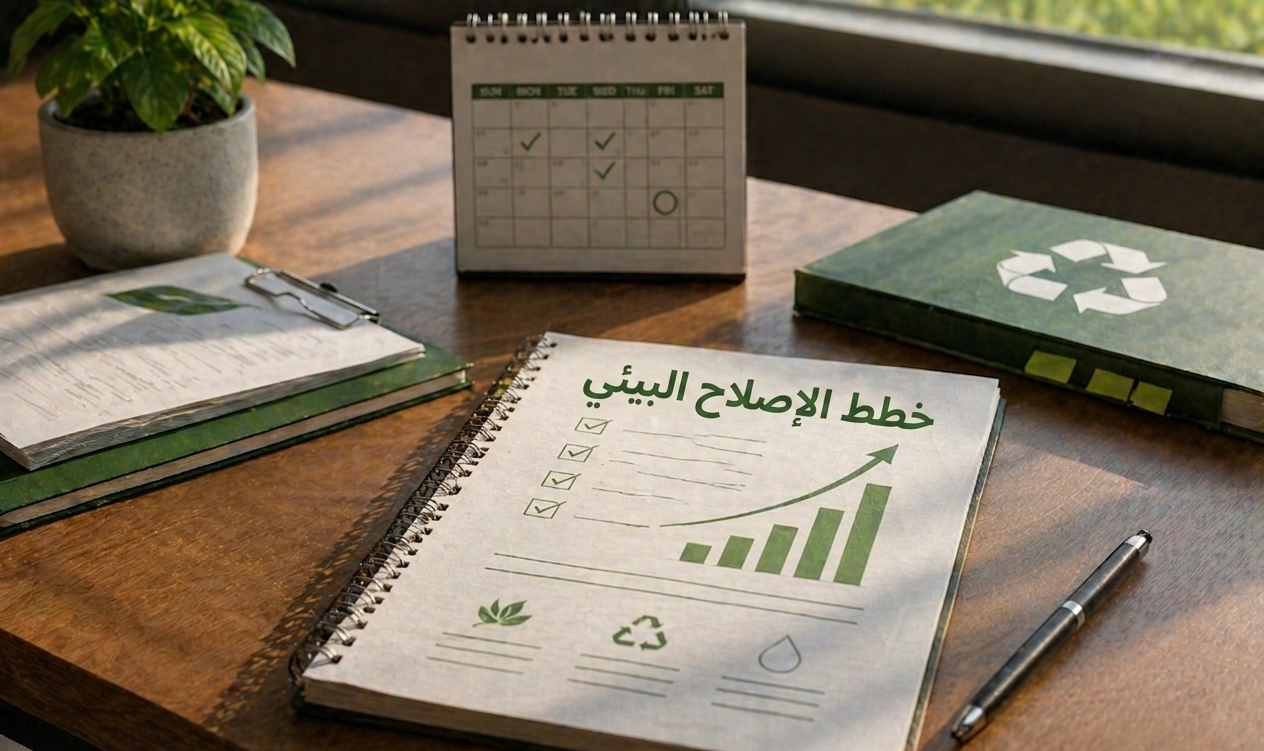
Minor violations: here flexibility of IDA emerges in facilitating procedures for obtaining environmental approvals by providing an environmental remediation plan bound by a timeline to eliminate violations detected during inspection to committee formed by IDA and EEAA.
This comes within an integrated framework covering various stages of investor dealing with IDA, from application submission to actual operation and subsequent follow-up, in context ofinvestor journey that ensures clarity of procedures and continuity of monitoring without complexity..
Environmental remediation plans: rapid resolution in status rectification
Environmental remediation plans are lifeline for existing factories seeking to rectify their environmental status to comply with modern standards, aiming at further facilitating procedures for obtaining environmental approvals:
1. Permanent committee for remediation plans: a specialized committee was formed to review these plans, and it meets twice a week to ensure no accumulation of requests.
2. New timeline: deciding on remediation plan and issuing technical approval for it now takes place within only 7 business days from date of its submission, meeting all requirements, to EEAA.
3. Follow-up and warning: in event that a facility does not commit to rectifying its status during period granted to it, IDA warns this facility of necessity to eliminate violations within period specified in the warning..
4. 4. If failure to eliminate violations continues, IDA, within a maximum of 21 days from expiry of warning period, draws up a violation report for the violating facility, which is sent to Minister of Industry to issue a resolution for closing this facility, ensuring that facilitating procedures for obtaining environmental approvals is coupled with effective enforcement.
Environmental protection services system: integrated logistical and technical support
Environmental protection services provided by IDA are vital pillars for promoting comprehensive environmental compliance. IDA Role extends from granting licenses to precise technical supervision over all chemical substances and production inputs. This system includes a set of core steps:
Customs clearance for chemical substances: through this service, IDA ensures that all shipments physically present at customs ports, or those whose annual needs are determined, comply fully with environmentally permissible lists. This preventative measure represents direct support for process of facilitating procedures for obtaining environmental approvals,, especially for factories that rely primarily on chemical inputs in their manufacturing processes.
Letters of clearance for waste importers: within framework of distinguished environmental protection services, IDA supports industrial companies that rely on permissible waste as raw materials. This is achieved by issuing official letters of clearance ensuring that this waste is processed in environmentally sound and safe ways inside the facility, preventing any negative impacts on the surrounding ecosystem.
Integration of these regulatory and technical roles reflects commitment of IDA to providing a professional level that ensures that the investor operates within a sustainable legal and environmental framework, pushing strongly toward facilitating procedures for obtaining environmental approvals for all industrial sectors.
Questions of interest to you regarding facilitating procedures for obtaining environmental approvals
Within the framework of permanent endeavor of IDA to bridge communication with manufacturers and clarify all inquiries that may cross investor's mind, we dedicated this section to answering most common questions related to procedural and regulatory system. We aim through these answers to shed light on mechanisms for facilitating procedures for obtaining environmental approvals and ensuring investor's awareness of rights and duties toward environment and national industry.
1- What about existing industrial facilities previously obtaining an operating license from city authorities or local units and not obtaining an operating license from IDA?
They are inspected through a joint committee from IDA and EEAA to ensure their environmental compliance and fulfillment of licensing requirements before obtaining operating license from IDA.
2- What are procedures taken by IDA to follow up on industrial facilities' fulfillment of environmental requirements?
Field inspection: a committee formed by IDA and EEAA inspects industrial facilities to determine extent of their commitment to licensing requirements, preparing necessary reports regarding them, and presenting them to competent authority at IDA.
Environmental measurements: EEAA sends results of the environmental measurements and determines extent of their compliance with standards contained in The Ministerial Decree No. 461 of 2018, notifying IDA in event of environmental violations and classifying them in terms of being major or minor violations.
Legal procedures: IDA, in its capacity as administrative body competent to issue operating licenses for industrial facilities, takes all procedures against violating facilities according to what is stated in Law No. 15 of 2017 and its executive regulations, as well as a cooperation protocol between IDA and EEAA.
The goal of all these procedures and joint committees is to create a "green" and competitive industrial environment. Investor who benefits from facilitating procedures for obtaining environmental approvals ultimately gains a competitive advantage, as products manufactured in environmentally compliant facilities enjoy greater export opportunities and wider acceptance in global markets that place environment as a fundamental condition for trade.

IDA continues to review and develop its mechanisms, emphasizing that laws such as Law No. 15 of 2017 are dynamic tools that evolve with evolution of industry, and that ultimate goal will always remain facilitating procedures for obtaining environmental approvals to enable manufacturers to operate in a safe and sustainable climate.