


International agreements represent a critical dimension of economic and investment integration between nations. This integration facilitates the reduction of obstacles facing investment and investors, and provides a framework for regulating competition. Furthermore, certain domestic industries stand to benefit significantly from these international accords, as they gain expanded access to new markets where their products are exempted from customs duties. Moreover, the multiple free trade agreements to which Egypt is a signatory provide access to a consumer base of 1.5 billion individuals, which includes 100 million consumers within Egypt. These agreements strategically connect investors to both established and emerging markets, and they are further augmented by the fact that 8% of global trade passes through the Suez Canal
Among the most pivotal of these agreements are:
Greater Arab Free Trade Agreement (GAFTA)
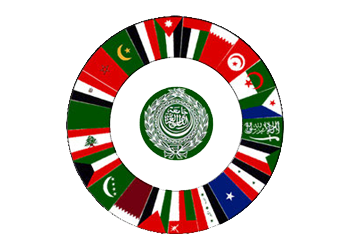
Date of Signature: 19/2/1997
Entry into Force:1/1/2005
- GAFTA includes all Arab States as members and is designed to facilitate and promote trade development among them. GAFTA stipulated the elimination of all non-tariff barriers, including administrative, monetary, financial, and technical obstacles, alongside the mandated annual reduction of customs tariffs.
- The mandated reduction commenced at 20% in 2001 and proceeded annually until achieving a full (100%) exemption in 2005.
- A complete exemption from customs duties shall be applied to goods exchanged, provided that the requisite Rules of Origin are met.
- Mauritania, Somalia, and South Sudan shall not apply any tariff reductions; however, reductions shall be granted unilaterally to Palestine.
- Rules of Origin: Specific detailed rules of origin shall be applied to certain commodities, while others require compliance with a 40% value-added requirement.
- Products originating from Free Zones shall not be entitled to any exemptions under the terms of this Agreement.
Common Market for Eastern and Southern Africa (COMESA)
 Date of Signature: 28/12/1998
Entry into Force: 17/2/1999
Free Trade Establishment: 2000
Member States (21): ): Egypt, Sudan, Eritrea, Ethiopia, Burundi, Rwanda, Comoros, Democratic Republic of the Congo, Djibouti, Kenya, Madagascar, Malawi, Mauritius, Uganda, Eswatini, Zambia, Libya, Seychelles, Zimbabwe, Tunisia, Somalia. The COMESA Agreement was initiated as a Preferential Trade Area (PTA), with the long-term objective of establishing a Free Trade Area (FTA) among member states, eventually progressing to a Customs Union and subsequently a Common Market. As a member of COMESA, Egypt grants goods and products accompanied by COMESA Certificates of Origin full exemption from customs duties and any other duties and charges having an equivalent effect. Pursuant to the Agreement's Rules of Origin, customs exemptions shall be applicable to all imported commodities originating in member states, subject to a value-added threshold of 35%. COMESA formally launched its Customs Union in June 2009, with the aim of reducing and unifying the external common tariff linearly over a ten (10) year period, commencing in 2009 and concluding in 2018.

Agadir Free Trade Agreement
Date of Signature:22/2/2004
Entry into Force:26/3/2007
Member States: : Egypt, Jordan, Morocco, and Tunisia. A full exemption from customs duties is applied to trade between these Parties
Agadir Free Trade Agreement aims to:
1. Implement the Rules of Cumulative Origin to strengthen and promote economic and trade cooperation among the member states.
2. Pursue the establishment and development of the Greater Arab Free Trade Area, thereby contributing to the broader efforts directed at establishing a Common Arab Market.
3. Foster increased trade exchange between Egypt and the signatory Arab countries, particularly given that current inter-Arab trade volume does not exceed 10% of the signatory states' total trade volume.
4. This Agreement encompasses several salient issues, including customs regimes, rules of origin, government procurement, financial transactions, safeguard measures, support for new industries, subsidies and anti-dumping provisions, intellectual property rights, standard specifications, and the establishment of a dispute settlement mechanism. Rules of Origin constitute one of the most essential articles stipulated in the Agadir Agreement, as this provision is anticipated to significantly enhance European market access for the products of the Member Parties, which shall consequently incentivise investment and augment inter-regional cooperation between the countries.
.jpg?timestamp=1709484403)
Egypt-EU Association Agreement
Date of Signature:25/6/2001
Entry into Force: 1/1/2004
The objective of this Agreement: (which encompasses 27 Member States) is to establish a Free Trade Area between Egypt and the EU Member States through the elimination of tariffs on industrial products and the facilitation of trade in agricultural products. A subsequent agreement concerning agriculture, processed agricultural, and fisheries products entered into force in 2010. The Free Trade Agreement focuses on augmenting trade between the two regions by progressively reducing customs duties on trade annually until they are permanently eliminated for specific products..
Rules of Origin:Euro-Mediterranean Rules of Origin apply.
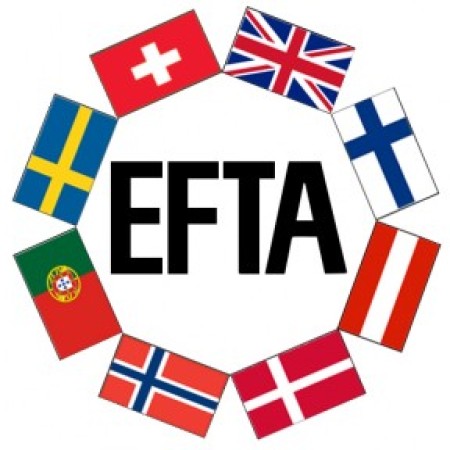
Egypt-EFTA Free Trade Agreement
Date of Signature:27/1/2007
Entry into Force:1/8/2007
Member States:The Agreement is designed to support and increase bilateral trade between Egypt and EFTA States, and to enhance economic integration in the Euro-Mediterranean region through the liberalisation of trade in industrial and processed agricultural products. All exported and imported industrial goods are fully liberalised from all customs duties and charges having equivalent effect. Regarding processed agricultural products, no tariff concessions or exemptions are currently exchanged. Coordination is ongoing with EFTA States to negotiate the treatment of processed agricultural goods for both Parties.
Rules of Origin: Euro-Mediterranean Rules of Origin apply
Trade Advantages of the Agreement:
1. Egypt shall receive financial and technical assistance from EFTA States for the development of the agricultural and fisheries sectors, and for contributions to several projects focused on the transfer of their expertise in the fields of textiles and garments and pharmaceutical products..
2. EFTA States are obligated to promote their economic cooperation with Egypt, and they shall provide technical assistance to facilitate the application of the Agreement. 3.This cooperation shall include working to enhance trade and investment opportunities and supporting the continuity of achievements in the field of economic and social development.• Economic cooperation shall focus on sectors facing challenges, growth, and the provision of employment opportunities in Egypt..

Qualified Industrial Zones (QIZ) Protocol
Date of Signature14/12/2004
Entry into Force1/2005
Member States: Egypt, United States of America, and Israel. Qualified Industrial Zones (QIZ) are specific geographic areas within the Arab Republic of Egypt that are entitled to duty-free status upon the entry of goods into the United States. Companies established within these zones are permitted duty-free access to the US markets, provided that they satisfy the agreed-upon, pre-defined Rules of Origin. The benefits of QIZ in Egypt are various; unrestricted access to US markets without specific quotas is the most significant, coupled with the elimination of tariff and non-tariff barriers. Other benefits include low factor costs and a substantial labour supply. Enhanced by the added benefits of trade agreements with other markets, Egypt is ideally suited to provide innumerable economic benefits to industries located within these zones. To date, the continued positive economic impact of QIZ is demonstrated by the ongoing efforts of both foreign investors and Egyptian companies alike to locate and qualify their businesses within these zones in order to increase their competitiveness and profitability. The industrial zones operating under the QIZ system are located in Alexandria, Suez Canal, Greater Cairo, and Delta region; Minya and Beni Suef are recent additions.
Egypt–Türkiye Free Trade Agreement
Date of Signature: 27/12/2005
Entry into Force: 1/3/2007
- Industrial Goods: Full liberalisation of all exports and imports of industrial goods from all customs duties and charges having equivalent effect.
Processed Agricultural Products: Egyptian exports of specific items are accorded a complete customs duty exemption on the industrial component, alongside a 15% tariff reduction on the agricultural component.
- Egyptian Imports: Certain products are granted preferential treatment within the framework of a tariff quota.
Egypt–Türkiye Free Trade Agreement aims to:
1. Eliminate restrictions on trade in goods, including agricultural products.
2. Create a suitable environment for attracting increased investments.
3. Ensure fair commercial competition between Egypt and Türkiye.
4. Establish favourable conditions for increasing and promoting joint investments between Egypt and Türkiye.
5. Promote trade and cooperation between the two States in third-country markets.
6. Facilitate access to the European Union market.
Egypt-MERCOSUR Free Trade Agreement:
Date of Signature: 15/7/2010
Entry into Force1/9/2017
Member States Egypt, Brazil, Argentina, Paraguay, and Uruguay
Four lists of exports and imports covering all commodities were established. Some are subject to immediate exemption and others to gradual exemption from customs duties, in addition to a list of sensitive commodities to which no tariff reductions are applied. The current implementation status of the four lists is as follows:
- Lists I and II have been fully exempted from customs duties.
- Lists III and IV are being gradually liberalised.
The Agreement aims to:
• Work towards reducing customs tariffs by more than 90% between Egypt and MERCOSUR States, and to liberalise agricultural goods from customs duties, while providing solutions for issues related to Rules of Origin, preferential safeguards, and cooperation in investment, services, and other areas..
• Open new and promising markets for Egyptian exports, while simultaneously offering a more competitive position for these exports, particularly in the markets of Argentina and Brazil, which are considered among the world’s most significant emerging economies..
• Secure and guarantee Egypt's long-term needs for foodstuffs at improved prices, and to enhance the confidence of Latin American investors in Egypt, thereby boosting investment in joint projects..
• Deepen South-South economic cooperation, while also establishing a bridge between the continents of Africa and Latin America, as Egypt is already linked by free trade agreements with most African countries that are members of COMESA, as well as with the Arab countries.
Rules of Origin: Detailed Rules of Origin apply.
African Continental Free Trade Area (AfCFTA)

Date of Signature: 21/3/2018
Entry into Force: January 2021
AfCFTA aims to enhance the competitiveness of African economies, attract investment opportunities within Africa, eliminate tariff and non-tariff barriers, and create a unified African market for goods and services. The first trade transaction under AfCFTA was executed in October 2022 between Egypt and Ghana, following the AfCFTA Secretariat's launch of the "Guided Trade Initiative". This initiative was established to implement the first trade deals among a limited number of States, including: Egypt, Ghana, Tanzania, Cameroon, Kenya, Rwanda, Mauritius, Tunisia, and Algeria. South Africa joined the initiative in January 2024.
AfCFTA includes three lists:
- List I: Non-sensitive Products. Preferential trade has been activated as of the Entry into Force of the Agreement in January 2021, based on the agreed Rules of Origin, with the exception of textiles, garments, and automobiles due to pending resolution. Gradual tariff reductions are being applied to exports and imports from: Rwanda, Tanzania, Mauritius, Tunisia, and Algeria over a five-year period, with an 80% reduction of customs duties starting from 01 January 2024. For Egypt’s exports and imports with: Ghana, Kenya, and Cameroon, tariff reductions are granted over a ten-year period, with a 40% reduction of customs duties starting from 01 January 2024
- List II: Sensitive Products — not yet in force.
- List III: Excluded Products — not yet in force.
Rules of Origin: Detailed Rules of Origin apply.